

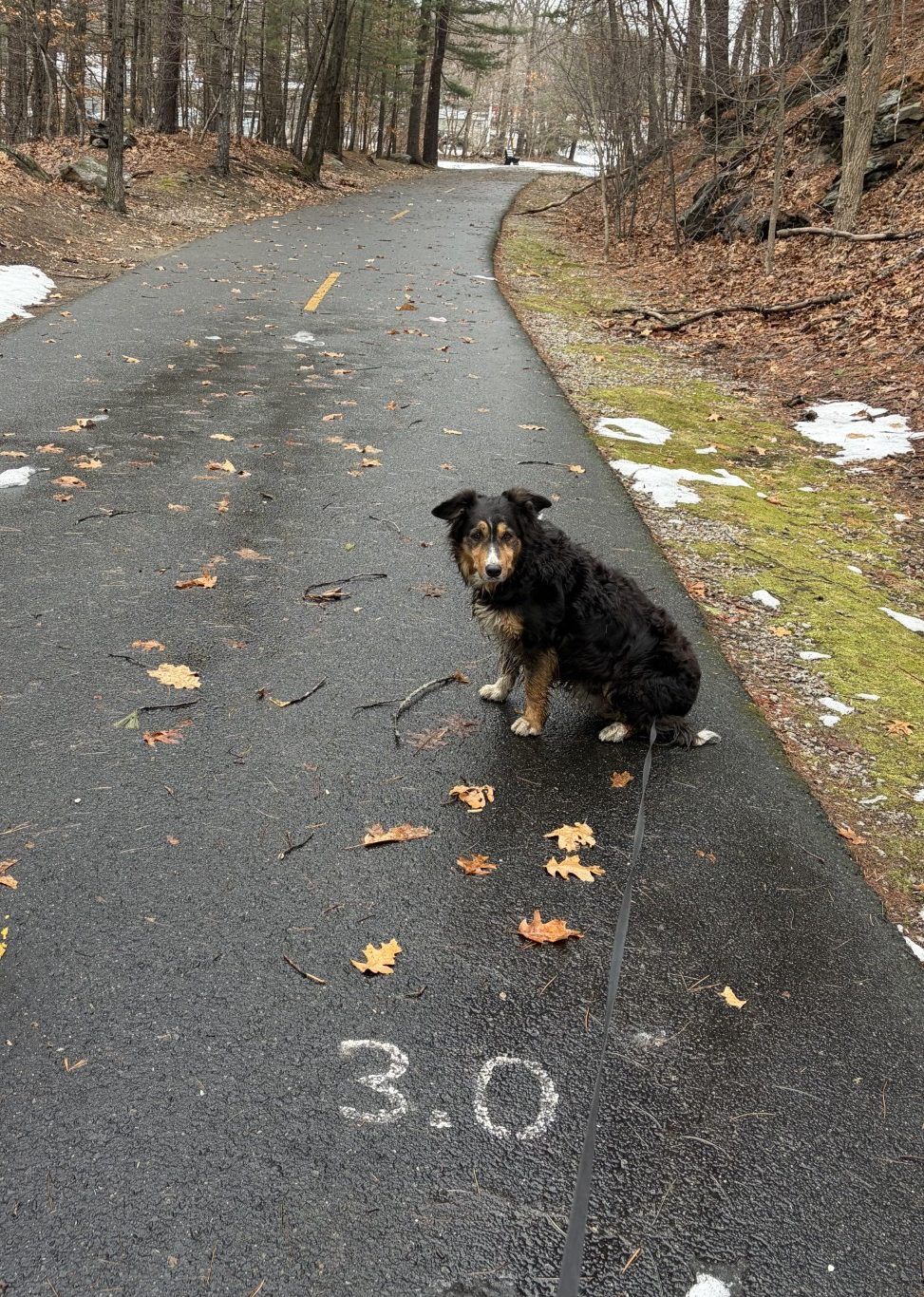
Snow is almost all gone.
Nature has made up her mind that what cannot defend itself shall not be defended.
— Ralph Waldo Emerson
The weather has continued to be warm, highs hovering in the high 50s. The snow is disappearing fast, with only short piles of the stuff left. Those piles used to be 4 feet or more feet high when they were made by passing plows. Waldo and I are walking on our usual route around the apartment buildings, a route that we avoided until now, because of deep snow. Rain storms have passed through our area in the past couple of days, which melted the snow even faster than the warm temperatures.
Along with the warming trend have come a few migratory birds. One species, in particular, caught my attention – the red-winged blackbird. I have a friend in Wisconsin, Kathie Giorgio, who has told me stories about the bird. During certain times of the year, nesting season, red-winged blackbirds make it practically impossible to go for a walk outdoors. They are very territorial and aggressive, swooping down from on high, attacking anyone who dares to enter their territory. Apparently, they can be really nasty buggers. And it is illegal to injure these birds, even in self-defense.
In 1918, the US Congress passed the Migratory Bird Treaty Act, in order to stop a massive commercial trade in birds and feathers, which was pushing species to extinction. The act implements treaties with Canada, Mexico, Japan and Russia. Violating the law can lead to as much as $250,000 in fines and 2 years in prison. Because red-winged blackbirds usually target their perceived invader’s heads for their strafing runs, the recommendation is, if you’re walking anywhere near their territory, you should wear a hat or carry an umbrella. That’s all you get.
I have never seen, nor heard of, anyone being attacked in Massachusetts by red-winged blackbirds. They like to build their nests in freshwater marshes (cattails, bulrushes), sedge meadows, even roadside ditches, and we have plenty of all of those in Massachusetts. Google says they do nest here, so maybe they just aren’t nesting in large enough numbers to make them a problem. Whatever the reason, I am not disappointed.
Today, as Waldo and I walk near the Fort Meadow Reservoir overlook, I hear a number of birds all speaking the same language. My phone says they are red-winged blackbirds and I look around to see if I can find them, as there are obviously quite a few. Off in the woods, I spy a dozen or so dark birds perched on the branches of a tree. They’re too far away to recognize for sure, but the songs I hear are coming from that direction. Damn, there’s a whole flock of them. A group of blackbirds is called a watch and I can see why. They’re perched up there, motionless, just staring down at us poor ground-pounders. I hope they aren’t here looking to set up shop, that would be all Waldo and I need. I can wear a hat, and always do, but what protection could I provide for Waldo? And that begs the question, if Waldo were to be attacked by one of these blackbirds, and he injured one trying to protect himself, would I be held legally responsible?
As Waldo and I continue on, I google the birds’ migratory habits. Apparently, this time of year, males will flock together, head north and look for possible nesting areas. A couple of weeks later, the females follow and build the nests. Damn. I certainly hope that global warming hasn’t changed the environment so much that those birds will start looking to set up nurseries here. As we trek down the path further, the red-winged-blackbird chatter is replaced by the sweet song of the usual permanent denizens: northern cardinals, tufted titmice, black capped chickadees and the ever-present house and song sparrows.
When Waldo and I get back to the overlook, on our way home, the red-winged blackbirds are gone. Good. Maybe they’ve moved on to Wisconsin (sorry, Kathie). The males are really pretty birds, with their red and yellow epaulets starkly contrasting with their shiny dark black plumage, but who needs the harassment? I don’t have a problem with the birds defending themselves and their offspring, but do they need to be so nasty about it?
Well, whatever happens, we’ll find a way to deal with it. With or without irate avian assault, Waldo and I love this forest.
And we aren’t giving it up easily.
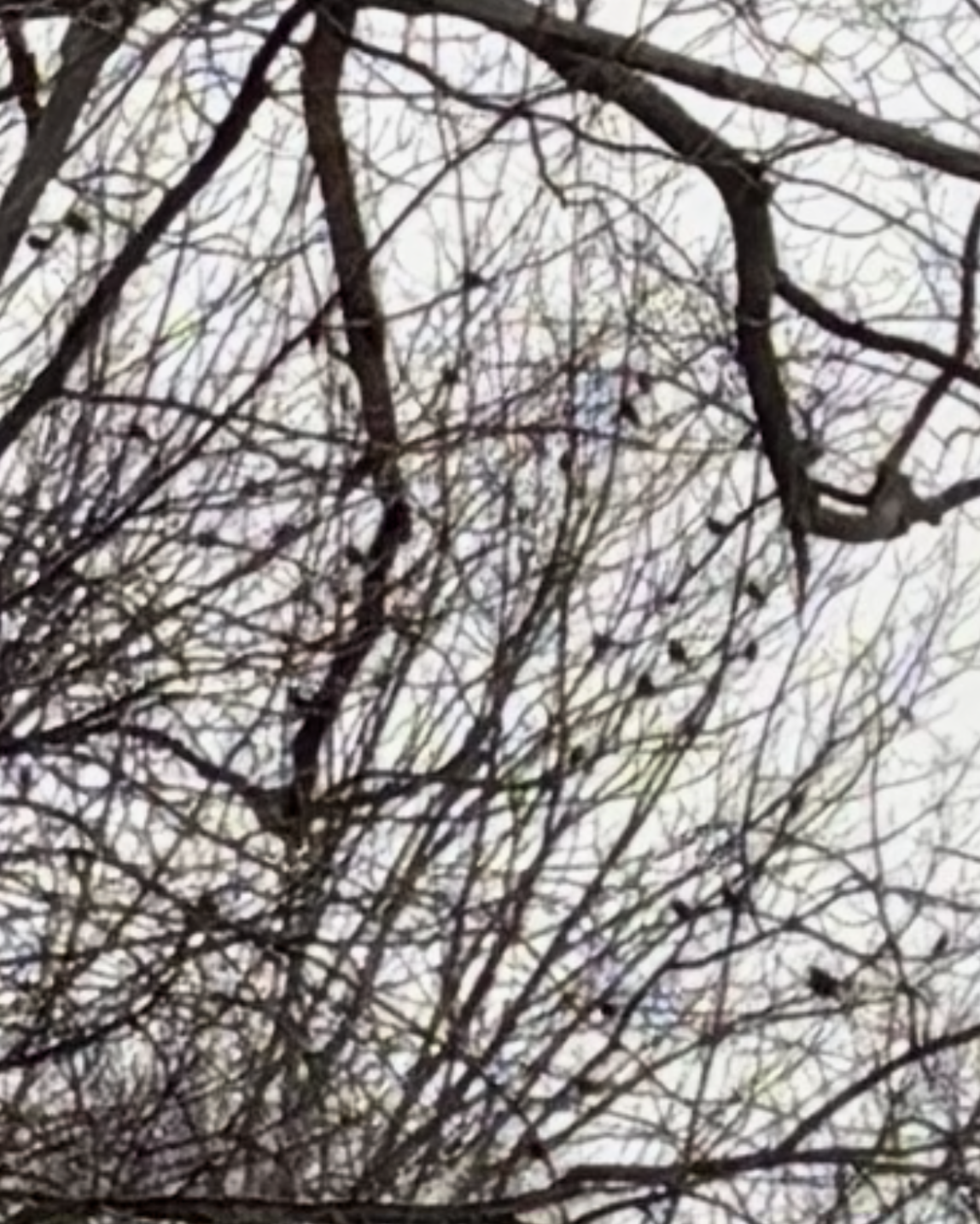
If you look closely, you can see a flock of red-winged blackbirds (called a watch) in the tree.